
Wild Beast Migration Travel Guide 2026–2027?
Overview
The Great Wildebeest Migration is one of Africa’s most extraordinary wildlife spectacles, connecting the vast plains of Tanzania’s Serengeti National Park with Kenya’s Maasai Mara ecosystem. More than simply a seasonal movement of animals, the migration is a continuous natural cycle in which wildebeest, zebras and other herbivores move in search of fresh grazing and water.
The migration takes place throughout the year, although the location of the herds changes considerably from month to month. The most famous period is generally July to October, when large numbers of animals move toward the northern Serengeti and Maasai Mara, creating opportunities to witness dramatic river crossings.
For travelers planning a safari in 2026 or 2027, understanding the seasonal movement is important because there is no single location where the migration can be guaranteed on a particular date. Weather, rainfall, availability of grass and water, and natural animal behavior all influence where the herds will be.
With careful planning, however, travelers can choose a destination and travel period that gives them a strong opportunity to experience a particular stage of the migration.
What Is the Great Migration?
The Great Wildebeest Migration is the annual movement of huge herds of wildebeest across the Serengeti-Mara ecosystem of Tanzania and Kenya.
TANAPA describes the Serengeti migration as involving more than 1.5 million wildebeest accompanied by hundreds of thousands of zebras, gazelles and other animals.
The animals continuously move between grazing areas as they respond to changing environmental conditions. Fresh grass provides the energy they need, while water becomes increasingly important during dry periods.
The migration is therefore not simply an event that begins in July and ends in October. It is a year-round ecological cycle.
The Main Animals
Wildebeest are the dominant species associated with the migration, but they do not travel alone. Large numbers of zebras, Thomson's gazelles and other herbivores move within the wider ecosystem.
Their movement also supports an enormous predator population. Lions, cheetahs, leopards, hyenas, crocodiles and other predators benefit from the concentration of prey.
This creates a constantly changing wildlife experience. A traveler may witness grazing herds in one area, predators following them in another and dramatic river activity elsewhere.
Migration Calendar 2026–2027
January to March
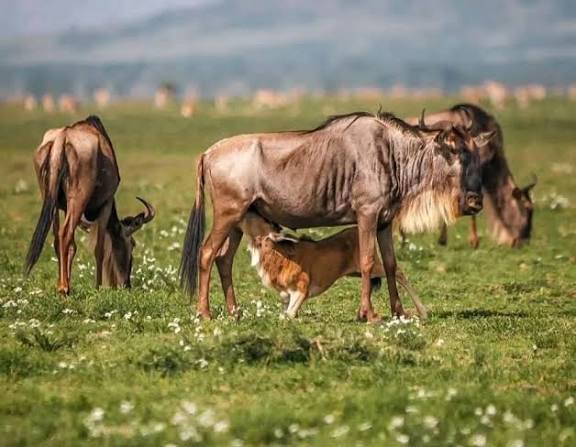
The beginning of the year is strongly associated with the calving season in the southern Serengeti and surrounding plains.
During this period, thousands of calves are born as the herds take advantage of nutritious short grass. TANAPA's migration information identifies the southern plains as an important calving area and notes that hundreds of thousands of calves can be born during this short period.
For photographers and wildlife enthusiasts, this season offers a different migration experience from the famous river crossings. Instead of concentrating exclusively on dramatic crossings, visitors can observe newborn animals, mothers protecting their young and predators taking advantage of vulnerable calves.
The calving period can also be excellent for observing predator-prey interactions because young animals are particularly vulnerable.
April to May
As the wet season progresses, the herds begin moving away from the southern plains toward areas with suitable grazing.
This period can be particularly attractive for travelers who want greener landscapes, fewer crowds in some areas and opportunities to experience the Serengeti beyond the peak migration months.
The exact location of the herds varies from year to year, so a professional safari operator should consider recent rainfall and local conditions rather than relying solely on a fixed calendar.
June
June is an important transition period.
The herds continue moving northward and westward through the Serengeti. Depending on rainfall and grazing conditions, travelers may encounter large concentrations of wildebeest and zebras.
The western Serengeti and Grumeti area can become particularly interesting during this period as the animals continue their northward movement.
Travelers should remember that the migration is unpredictable. Seeing thousands of animals in June is possible, but the exact timing of major movements cannot be guaranteed.
July to August
July and August are among the most popular months for travelers hoping to experience the northern migration.
The herds move toward the northern Serengeti and the Maasai Mara ecosystem in Kenya. The famous Mara River crossings may occur during this period, although the timing varies and the animals do not cross every day simply because visitors are present.
The Maasai Mara tourism authority describes July to October as the principal period associated with the migration in Kenya.
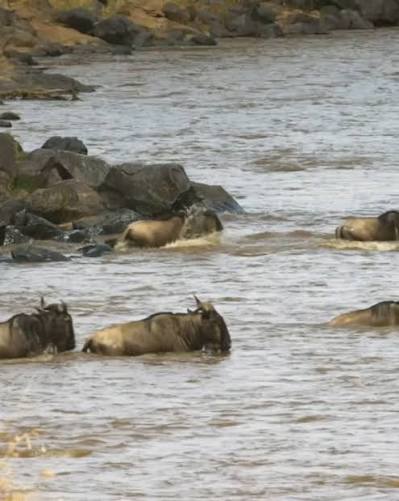
River crossings can be dramatic because animals must negotiate steep riverbanks, strong currents and crocodiles. However, they are also unpredictable. Herds can gather at a river for hours or days before crossing, and sometimes they turn back.
September to October
September can continue to provide excellent migration opportunities in the Maasai Mara and northern Serengeti.
The herds may still be spread across the Mara ecosystem, while other groups begin moving back toward Tanzania.
October is an important transition period because some herds begin their southward movement toward the Serengeti. Kenya's tourism information also describes October as the period when the herds begin turning southward.
Travelers visiting during this period may therefore experience a mixture of migration activity and excellent resident wildlife viewing.
November to December
The short rains encourage the herds to continue their return toward the southern Serengeti.
This period marks another important stage of the migration cycle as the animals gradually move toward areas where fresh grazing will support the next calving season.
December can therefore be an excellent time for travelers interested in experiencing the Serengeti outside the busiest migration months.
Where to See the Migration
Serengeti National Park
Tanzania's Serengeti National Park is at the heart of the Great Migration.
Its enormous plains provide important grazing areas for the migrating herds, while the park also supports large populations of lions, cheetahs, leopards, elephants, buffaloes, giraffes and many other species.
The Serengeti is particularly important because the migration is not simply a Kenya-based attraction. The animals spend substantial parts of their annual cycle in Tanzania.
TANAPA identifies the Great Migration as one of the Serengeti's principal attractions alongside its Big Five, carnivores, herbivores, birds and landscapes.
Northern Serengeti
The northern Serengeti is especially important during the migration's movement toward Kenya.
Travelers visiting during July, August and September often consider this region when planning a safari focused on the northern movement and potential Mara River crossings.
However, a northern Serengeti safari should not be sold as a guaranteed river-crossing experience. The animals decide when and where to cross.
Maasai Mara
Kenya's Maasai Mara National Reserve is one of the most famous destinations associated with the migration.
During the migration season, large herds enter the Mara ecosystem from Tanzania, creating spectacular wildlife-viewing opportunities.
The Mara also supports resident populations of lions, cheetahs, leopards, elephants, buffaloes, giraffes, hippos and many other animals, meaning visitors can enjoy a productive safari even when the migrating herds are temporarily elsewhere.
The Mara River Crossings
Why They Are Famous
The Mara River crossing is one of the most recognizable scenes associated with the Great Migration.
Large groups of wildebeest gather near the river before eventually entering the water. The crossing can become chaotic as animals respond to pressure from the herd behind them.
Crocodiles and strong currents add another natural challenge.
However, travelers should understand that a river crossing is never guaranteed. The animals may gather without crossing, cross at another location or move away from the river altogether.
Responsible Viewing
River-crossing tourism requires responsible behavior.
TANAPA's official guidelines require vehicles to remain in designated areas when viewing crossings and prohibit vehicles from approaching animals during the crossing.
Responsible tourism protects both wildlife and visitors while helping preserve the experience for future travelers.
Best Time to Visit
For Calving
January to March is particularly suitable for travelers interested in the calving season and young animals.
This period provides opportunities to see newborn wildebeest and the predators that follow the herds.
For River Crossings
July to October is the traditional period for travelers seeking the possibility of witnessing Mara River crossings. Kenya's official tourism information identifies July to October as the main migration period in the Maasai Mara.
Nevertheless, travelers should avoid booking a safari based on the assumption that a crossing will happen on a particular day.
For Fewer Crowds
Traveling outside the peak migration months can provide a quieter safari experience, depending on the destination and specific dates.
The migration remains a year-round phenomenon, so travelers do not necessarily have to visit during the busiest months to experience large herds.
Planning Your 2026–2027 Safari
Choose Your Experience
The first step is deciding what you want to see.
A traveler interested in newborn animals may prefer the southern Serengeti during the calving season. Someone interested in the northern movement may choose the Serengeti-Mara region during July to October.
This makes itinerary design more important than simply choosing a popular month.
Choose Your Route
A migration safari can focus on Tanzania, Kenya or combine both countries.
A Tanzania-focused itinerary can include Serengeti, Ngorongoro Conservation Area and Tarangire. A Kenya-focused itinerary can combine Maasai Mara with destinations such as Lake Nakuru or Amboseli.
A cross-border safari can provide a broader perspective of the ecosystem and may allow travelers to follow different stages of the migration.
Book Accommodation Early
Peak migration months can place considerable pressure on accommodation in popular wildlife areas.
Travelers planning for July, August or September 2027 should begin planning well in advance, particularly if they want specific camps or lodges near migration areas.
TANAPA's trip-planning guidance recommends considering seasons, permits, routes, accommodation and park requirements when organizing a safari.
Safari Activities
Game Drives
Game drives are the main way to experience the migration.
Early morning drives can provide opportunities to see predators before they become less active during the warmer part of the day.
Afternoon and evening drives provide different lighting and wildlife activity.
Photography
The migration is particularly attractive to wildlife photographers because it combines enormous herds with dramatic landscapes.
A telephoto lens is useful for distant animals, while a wider lens can capture the scale of a herd stretching across the plains.
Balloon Safari
Hot-air balloon safaris are another way of experiencing the Mara and Serengeti landscapes.
From the air, travelers can appreciate the size and movement of wildlife across the plains. Kenya's tourism information highlights balloon experiences as one way of viewing the migration.
Cultural Experiences
A migration safari can also incorporate cultural experiences with local communities, particularly around the Maasai Mara and northern Tanzania.
This can provide travelers with a broader understanding of the people, traditions and landscapes surrounding the wildlife ecosystem.
What to Pack
Safari Clothing
Lightweight, breathable clothing is useful during the day, while a warm layer is recommended for early morning game drives.
Neutral colors are generally practical for wildlife viewing.
Comfortable walking shoes, a hat and sunglasses are also useful.
Photography Equipment
Travelers interested in photography should consider bringing spare batteries, memory cards, a telephoto lens and protection for equipment against dust.
A pair of binoculars can also make a major difference when observing distant animals.
Personal Essentials
A safari packing list should include sunscreen, insect repellent, personal toiletries, a reusable water bottle, medications prescribed for the traveler and a small day bag.
Exact requirements can vary depending on the route, accommodation and season.
Safari Costs
The cost of a 2026–2027 migration safari depends on the country, duration, accommodation level, transport, park fees, activities and travel dates.
Budget camping safaris can be substantially less expensive than luxury private safaris using exclusive camps and private vehicles.
Peak migration months may also have higher accommodation rates than less busy periods.
Instead of choosing a safari solely by price, travelers should compare what is included, including accommodation, meals, transport, professional guiding, park fees and activities.
Why Choose Satellite Adventures?
Local Safari Planning
Satellite Adventures can help travelers plan their migration experience around their preferred travel dates, budget and wildlife interests.
Rather than treating the migration as a single event, the itinerary can be designed around the seasonal movement of the herds.
Tailor-Made Safaris
Every traveler has different priorities.
Some want to photograph river crossings, others are interested in predators, while families may prefer a comfortable itinerary with shorter driving distances.
Satellite Adventures can structure the safari around these individual requirements.
Experienced Guidance
A professional guide can make an important difference during a migration safari. Guides monitor wildlife activity, understand the landscape and help travelers interpret animal behavior.
This is particularly useful because the migration does not follow a perfectly predictable timetable.
Responsible Wildlife Tourism
The Great Migration is a natural phenomenon that depends on a healthy ecosystem.
Responsible safari operators should encourage guests to respect park regulations, maintain appropriate distances from wildlife, avoid disturbing animals and follow instructions from park authorities.
This is especially important around river crossings, where TANAPA has established specific viewing guidelines.
Flexible 2026–2027 Planning
Satellite Adventures can help travelers consider different periods during 2026 and 2027 rather than promising a particular migration event on a specific date.
This approach allows the itinerary to remain realistic while giving travelers the best possible opportunity to experience the part of the migration that interests them most.
Suggested Migration Itineraries
5-Day Serengeti Migration Safari
A five-day itinerary can focus on the Serengeti, with several nights positioned in areas where the herds are expected to be based on seasonal patterns.
The itinerary can include game drives, predator viewing and opportunities to photograph large concentrations of wildebeest and zebras.
7-Day Tanzania Migration Safari
A seven-day safari can combine the Serengeti with Ngorongoro and another northern Tanzania destination.
This provides travelers with more than migration viewing by adding crater wildlife and varied landscapes.
8-Day Kenya and Tanzania Migration Safari
An eight-day cross-border safari can combine the Serengeti and Maasai Mara, allowing travelers to experience both sides of the migration ecosystem.
This can be particularly attractive for travelers visiting during the northern migration period.
10-Day Great Migration Safari
A longer itinerary allows more time to search for the herds rather than moving between destinations every day.
Additional time is valuable because wildlife movements are unpredictable and travelers may need several game drives to find the main concentrations.
Travel Tips
Do Not Expect a Guarantee
One of the most important things to understand before booking a migration safari is that nature cannot be scheduled.
Even during the traditional migration months, the animals may be somewhere different from where expected.
A responsible safari company should explain this clearly instead of guaranteeing a river crossing.
Stay Flexible
Flexibility increases the value of a migration safari.
If the herds move to another part of the ecosystem, the safari itinerary may need to adapt accordingly.
Choose the Right Camp
Accommodation location can have a significant effect on the safari experience.
Staying closer to the expected wildlife activity can reduce unnecessary driving and provide more time for game viewing.
Follow Park Rules
Visitors should follow instructions from guides and park authorities at all times.
The Serengeti's official river-crossing guidelines specifically emphasize designated vehicle positions and prohibit approaching animals during crossings.
The Migration and Conservation
The Great Migration is important not only for tourism but also for the ecological health of the Serengeti-Mara ecosystem.
Wildebeest consume enormous quantities of grass, move nutrients through the ecosystem and provide prey for predators.
TANAPA notes that the migration supports the wider ecological functioning of the Serengeti-Mara-Ngorongoro ecosystem and identifies threats including drought, habitat loss, human pressure and disruption of traditional migratory routes.
Tourism therefore has a role to play in conservation when visitors and operators follow regulations and support responsible wildlife management.
Conclusion
The 2026–2027 Great Wildebeest Migration offers travelers the opportunity to experience one of Africa's most remarkable natural cycles.
From the birth of thousands of calves in the southern Serengeti to the movement of enormous herds toward the northern Serengeti and Maasai Mara, every season offers something different.
July to October is widely associated with the spectacular northern migration and potential Mara River crossings, while January to March provides an opportunity to experience the calving season.
The most important lesson for travelers is that the migration is not a fixed event with a guaranteed timetable. It is a constantly moving natural process influenced by rainfall, grazing and water availability.
With careful planning, realistic expectations and responsible wildlife practices, a safari with Satellite Adventures can turn a visit to the Serengeti and Maasai Mara into a meaningful wildlife experience while supporting the conservation of one of East Africa's most important ecosystems.
Plan your 2026–2027 Great Wildebeest Migration safari with Satellite Adventures and experience the Serengeti-Mara ecosystem, spectacular wildlife, breathtaking landscapes and the extraordinary natural cycle of East Africa.
1 Comments